Batten Civil Engineering Limited is one of the leading Surfacing, Civil Engineering and Line Marking firms in the South East of England.
Contact us today
We are very much a family-run company and many of our employees and customers have been with us from the start. Over that time we’ve also built up strong relationships with our suppliers and enjoy special rates and discounts from them.

Over 10,000 jobs completed

Our ethos is quality, not quantity

Established in 1993

Our expert team with a combined 250 year’s experience

90% of our business comes from repeat clients and referrals

Some of our team members have been with us for over 30 years

3000 - 4000 tons of materials recycled per year

We own our yard plant machinery, lorries and vans
Finance and credit card payments now available
Committed to excellence to an International audience.
When a road, car park or commercial access area begins to deteriorate, property owners must decide whether to repair the existing surface, resurface it or undertake a more extensive reconstruction project. Understanding the difference between resurfacing and reconstruction helps businesses choose an appropriate solution, manage budgets and avoid paying for work that does not address the underlying problem.
Resurfacing replaces or renews the existing road surface, whereas reconstruction involves replacing some or all of the structural layers beneath it as well as installing a new surface. Resurfacing is generally suitable when the underlying pavement remains in reasonable condition. Reconstruction may be necessary when the foundation has failed, the road has suffered significant settlement or structural damage is too extensive for surface renewal alone.
For commercial property managers, developers and facilities teams, the decision affects more than the appearance of the finished surface. It can influence project costs, construction time, traffic management, future maintenance and how reliably the road performs under regular use.
Batten Civil Engineering Ltd provides surfacing, road and car park construction, patching, groundwork and related civil engineering services across Sussex, Surrey, Kent and London. In this guide, we explain how resurfacing and reconstruction differ, when each option may be appropriate and what to consider before arranging work.
Road resurfacing involves renewing the existing surface layer of a road, car park, driveway or other paved area. Depending on the condition of the pavement, the contractor may remove the worn surface and replace it or apply a new layer over a suitable existing surface.
The purpose is to restore the running surface, improve its condition and address widespread surface deterioration without necessarily rebuilding the entire pavement structure.
A resurfacing project may involve:
Resurfacing may be appropriate when the existing road structure remains sufficiently stable but the upper surface has deteriorated.
Typical examples include:
Road reconstruction is a more extensive construction process that involves removing and replacing some or all of the existing pavement structure. It is used when the road has deteriorated beyond the point where resurfacing alone is likely to provide a suitable result.
A typical paved road consists of several layers. The visible surface sits above supporting pavement layers, which distribute vehicle loads and transfer them towards the underlying ground. If these layers become unstable or fail, replacing only the surface may not resolve the problem.
Reconstruction can involve:
Reconstruction may be considered when there is evidence that the pavement structure, rather than just the visible surface, has failed.
Warning signs may include:
Although both methods can produce a new road surface, they differ in the extent of work involved.
| Factor | Resurfacing | Reconstruction |
| Main purpose | Renew the existing surface | Rebuild failed or unsuitable pavement layers |
| Existing surface | Removed or covered, depending on the design | Usually removed as part of the rebuild |
| Foundation work | Limited or localised where appropriate | More extensive where structural layers need replacement |
| Excavation | Often relatively limited | Usually more substantial |
| Drainage work | May be needed for local issues | May form part of wider reconstruction works |
| Cost | Often lower when the foundation is sound | Usually higher because more work and materials are involved |
| Programme | Often shorter for comparable areas | Often longer because of excavation and rebuilding |
| Disruption | May be easier to manage in phases | Can require more extensive closures and access changes |
| Best suited to | Surface deterioration with a suitable underlying structure | Structural failure or extensive pavement deterioration |
| Main limitation | Cannot correct every underlying structural problem | May be unnecessary if the existing structure is still sound |
| These are general comparisons, not fixed rules. A large resurfacing scheme can still be complex, and a localised reconstruction may be completed relatively quickly. Site size, material availability, weather, drainage requirements and access restrictions all influence the programme. |
The most reliable way to choose between resurfacing and reconstruction is to assess the condition of the entire pavement rather than looking at the visible surface alone.
A road can appear badly worn while retaining a sound foundation. Equally, a relatively small pothole can be the visible result of a deeper problem beneath the surface.
The following signs can help identify when further investigation may be appropriate.
If the main problems involve worn surfacing, minor surface defects or widespread deterioration of the upper layer, resurfacing may be a suitable option.
If the surface contains deep cracks, major depressions, widespread rutting or recurring failures, the contractor should investigate whether the structural layers have deteriorated.
The extent of damage matters, but its cause matters just as much. A large area of surface wear does not automatically require reconstruction, and a small damaged area does not automatically mean a simple patch will last.
Repeated potholes can indicate that earlier repairs have not addressed the underlying cause.
For example, a commercial access road might develop a pothole in the same location every few months. Repeated patching may temporarily improve the surface, but the defect could return if water is entering the pavement or the supporting layers have weakened.
The contractor should assess the damaged area, surrounding pavement and drainage before recommending the next step.
Depending on the findings, a localised structural repair, broader resurfacing or reconstruction may be appropriate.
For further guidance, read Batten’s article on car park patching or full resurfacing.
Settlement occurs when an area of pavement sinks or moves. Rutting creates depressions along the paths where vehicle wheels regularly travel.
Both can affect vehicle movement, surface drainage and the long term performance of the road.
Minor localised problems may be repairable, but widespread settlement or deep rutting can indicate issues with the supporting construction.
If the road has been carrying heavier traffic than originally anticipated, the existing pavement may also be unsuitable for its current use.
An assessment can help determine whether localised repairs will be sufficient or whether more extensive reconstruction is justified.
Water is an important consideration when deciding between resurfacing and reconstruction.
Poor drainage can allow water to collect on the surface or enter cracks and damaged pavement. Over time, this may contribute to deterioration and weaken the supporting layers.
If standing water is caused by a minor drainage defect, correcting that defect and resurfacing the affected area may be sufficient.
If the road has widespread settlement, damaged drainage infrastructure or a weakened foundation, more substantial work may be required.
A new surface will not reliably solve an underlying drainage problem unless the cause is addressed.
Batten’s guide to how drainage problems damage commercial surfacing explains why drainage should be considered alongside surface condition.
Maintenance records can help reveal patterns that are not immediately obvious during a site inspection.
If a road has required frequent patching, repeated crack repairs or several surface renewals in a relatively short period, the contractor should investigate why the problems keep returning.
Previous work may have addressed the visible defects without resolving a problem beneath them.
Understanding the repair history can help the contractor recommend a more suitable treatment and reduce the risk of repeating ineffective work.
Resurfacing is generally less expensive than full reconstruction when the existing pavement structure remains suitable for reuse. It typically involves less excavation, fewer replacement materials and a shorter construction process.
Reconstruction usually costs more because it can involve removing failed layers, excavating unsuitable material, rebuilding the foundation, repairing drainage and installing a new pavement structure.
However, the cheapest initial option is not always the most economical over the life of the road.
Resurfacing can offer good value when the existing foundation is sound and the main requirement is to renew the upper surface.
It may help businesses restore a large paved area without paying for unnecessary excavation or replacement of structural layers that remain in good condition.
The final price depends on factors such as:
Reconstruction requires more extensive work, but it may be the more appropriate investment when the pavement structure has failed.
If resurfacing is applied over an unstable foundation, defects may return and further expenditure may be needed.
In that situation, a more substantial initial project could provide better long term value than repeated surface renewals.
The cost should be assessed against the actual condition of the road, the required construction specification and the likely maintenance needs of each option.
When obtaining quotations, check whether each contractor is proposing the same scope of work.
One quotation might cover only the removal and replacement of the surface course. Another might include foundation repairs, drainage improvements and adjustments to existing infrastructure.
These proposals are not directly comparable unless their inclusions and assumptions are understood.
Ask contractors to explain:
There is no single lifespan that applies to all resurfacing and reconstruction projects. Durability depends on design, materials, traffic loading, ground conditions, drainage, workmanship and ongoing maintenance.
Resurfacing can provide a durable renewal when the underlying pavement is sound and the new surface is suitable for its intended use.
Reconstruction can provide a more appropriate long term solution when the existing structural layers have failed, provided the new pavement is correctly designed and constructed.
A newly installed surface can deteriorate earlier than expected if the underlying issues have not been resolved.
Potential causes include:
Regular inspections can help identify developing defects before they become extensive.
Property managers should monitor cracks, potholes, settlement, drainage and changes in surface condition. Repairs should be selected according to the cause and severity of each defect.
Maintenance cannot prevent every form of deterioration, but a planned approach can help businesses manage repairs and identify when a more substantial project should be considered.
The process varies according to the site and specification, but a typical project follows several stages.
The contractor inspects the existing surface, identifies defects and reviews drainage, access and levels.
The assessment helps determine whether resurfacing is suitable and whether localised repairs or other preparatory work are required.
Damaged material is removed where necessary, and the existing surface is prepared for the new layer.
Localised areas of failure may require additional repairs before resurfacing can proceed.
The contractor checks relevant drainage features, edges and levels. Any required corrections should be completed as part of the agreed scope.
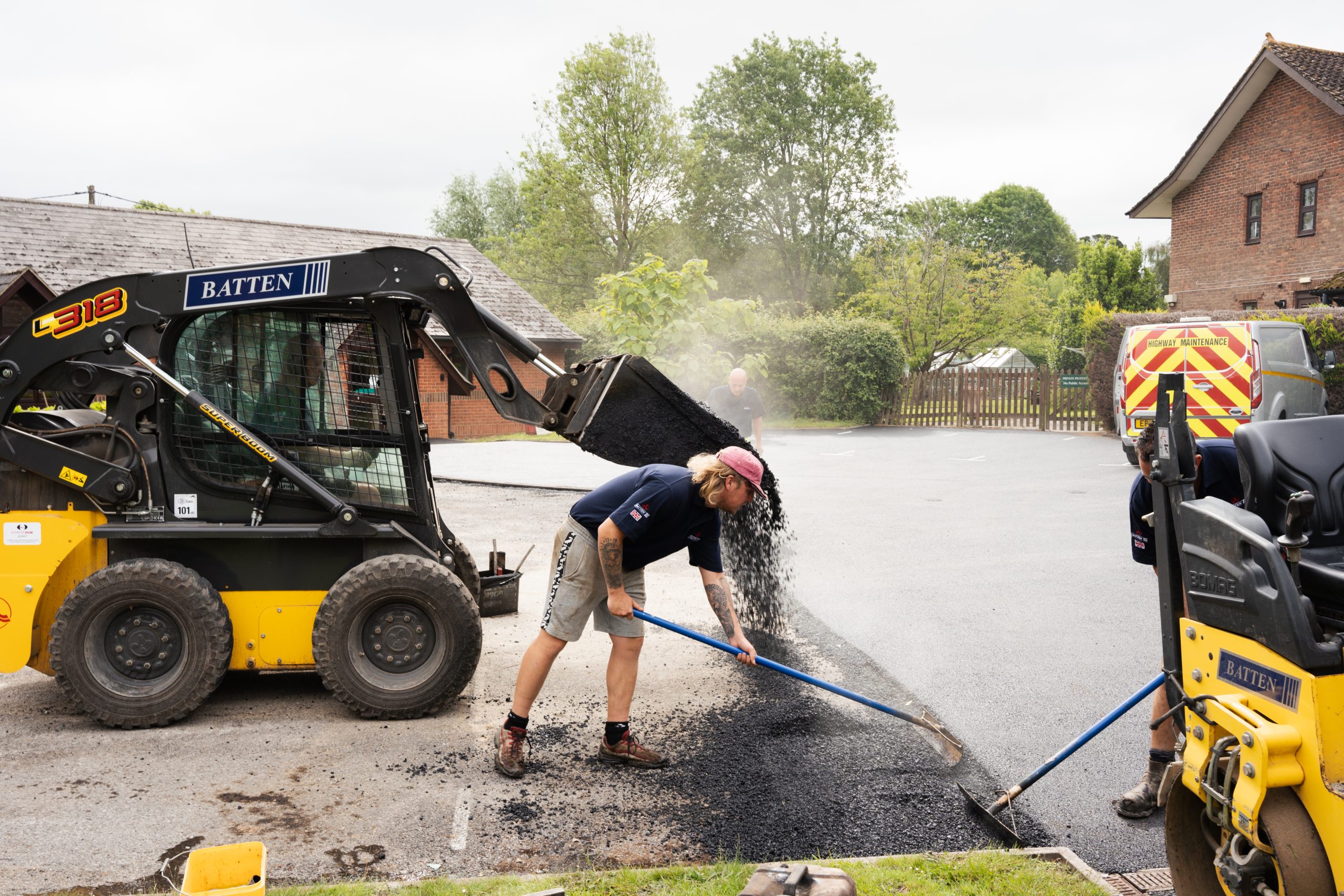
The specified asphalt or tarmac material is laid and compacted using suitable equipment and methods.
The installation process depends on the material, project size and construction requirements.
Edges, joints and other finishing details are completed. Road markings may be reinstated if included in the project.
The contractor should confirm when the area is suitable to reopen to traffic.
Reconstruction involves more extensive preparation because the existing pavement structure may need to be rebuilt.
The contractor assesses the existing road and identifies the extent of structural failure. Depending on the project, this may involve additional surveys, investigation of pavement layers and assessment of ground or drainage conditions.
The results inform the construction specification.
The existing surface and the structural layers identified for replacement are removed.
The depth of excavation depends on the extent of failure and the required pavement design.
The exposed formation is assessed and prepared. Unsuitable material may need to be removed or treated, and a new or improved sub base may be installed where required.
Compaction and level checks help establish the platform for the replacement pavement.
Required drainage repairs, kerbing, service adjustments and related groundwork are completed in the planned sequence.
These activities may need to take place before the new pavement layers are installed.
The specified structural layers are installed in accordance with the design. Depending on the project, these may include base, binder and surface courses, alongside any required foundation layers.
Each layer contributes to the performance of the finished road.
The final surface is laid, compacted and finished. Markings and other associated features are reinstated where included.
The contractor completes the relevant checks and confirms when the area can return to use.
Both options can disrupt normal business activities, but the extent of disruption depends on the size of the project, access requirements and construction method.
Resurfacing may be easier to complete in phases where the existing foundation is sound and the work can be divided into manageable sections.
Reconstruction may require larger working areas to be excavated and rebuilt, which can make access planning more involved.
For commercial premises, the contractor and property manager should agree:
The following examples illustrate how the decision may work in practice. They are general scenarios, not assessments of any particular property.
An office car park has widespread surface wear and minor defects. The drainage is functioning, the pavement appears stable and there are no clear signs of significant settlement.
After assessing the site, a contractor may recommend resurfacing with localised repairs to affected areas.
Reconstruction may be unnecessary if the existing foundation is suitable for reuse.
An industrial yard used by heavy goods vehicles develops potholes in the same locations despite repeated repairs.
An assessment identifies that the damage is associated with weakened supporting layers in heavily trafficked areas.
In this case, localised reconstruction may be needed in the failed sections before resurfacing or completing the wider surface works.
Simply applying a new surface over the affected areas may not address the underlying problem.
A commercial access road has areas where water collects after rainfall. The surface is deteriorating around these locations.
The contractor investigates the levels, drainage features and condition of the pavement.
If the issue is limited to a drainage defect and the foundation remains sound, drainage repairs and resurfacing may be sufficient. If settlement and structural damage are extensive, reconstruction may be necessary in affected areas.
The correct treatment depends on the cause of the problem.
A developer needs an access road for a new commercial building where no suitable road currently exists.
This is a new construction project rather than straightforward resurfacing. The design and construction may involve ground preparation, drainage, foundation layers, surfacing, kerbing and road markings.
The specification should reflect expected traffic, ground conditions and the wider development requirements.
Yes. A project does not always need to use the same treatment across the entire site.
If the majority of a road remains structurally sound but several areas have failed, a contractor may recommend localised reconstruction followed by wider resurfacing.
This approach can avoid replacing sound structural layers unnecessarily while ensuring that damaged sections receive more substantial treatment.
For example, a commercial car park might have a generally stable surface but contain a few areas of settlement near drainage channels and loading bays. The failed areas may need excavation and rebuilding, while the remaining surface may be suitable for resurfacing.
The final approach should be based on an assessment of the site, the extent of deterioration and the desired performance of the finished pavement.
Before agreeing to resurfacing or reconstruction, businesses should understand why the recommended treatment is appropriate.
Consider asking:
No. Resurfacing renews the existing surface layer, while reconstruction replaces some or all of the structural pavement layers as well as providing a new surface. The appropriate option depends on the condition of the existing pavement.
Resurfacing is generally less expensive when the underlying structure remains suitable for reuse. Reconstruction normally involves more excavation, materials and labour. However, resurfacing may offer poor value if structural defects cause the new surface to fail prematurely.
Potentially. If the potholes are localised and the surrounding pavement is structurally sound, repairs followed by resurfacing may be appropriate. If the potholes result from widespread structural failure, more extensive reconstruction may be needed.
No. Reconstruction can involve replacing only selected structural layers or rebuilding specific failed sections. The extent of the work depends on the investigation findings and the pavement design.
Resurfacing often takes less time because it generally involves less excavation and fewer replacement layers. Reconstruction usually takes longer because it can require ground preparation, drainage works and rebuilding the pavement. Actual times depend on the size and complexity of the project.
Yes, where the scope includes the necessary drainage work. However, the contractor must determine whether the problem is localised or linked to wider structural deterioration. Resurfacing alone will not necessarily correct poor drainage.
Resurfacing may be appropriate when the existing foundation is sound and the main issue is surface wear. Reconstruction may be necessary when the supporting pavement has failed or significant settlement is present. A site assessment can help determine the appropriate treatment.
Obtaining comparable quotations can help you understand the available options and costs. Make sure each quotation clearly states the preparation, materials, excavation, drainage, finishing and other work included so that you are comparing equivalent proposals.
Yes. Depending on the site layout, work may be divided into sections to manage access and disruption. Reconstruction can require larger closures in affected areas, while resurfacing may offer more flexibility where the existing structure is suitable.
The contractor should inspect the existing surface, assess the underlying pavement and drainage, identify required repairs, prepare the area and confirm that the existing structure is suitable for the proposed treatment. The exact checks depend on the project specification.
Resurfacing and reconstruction both have an important role in maintaining roads, car parks, industrial yards and commercial access areas. The key is to match the treatment to the condition of the existing pavement.
Resurfacing can be an effective option when the surface has deteriorated but the supporting structure remains suitable. Reconstruction is more appropriate when structural layers have failed or the road requires a more extensive rebuild.
Choosing the right treatment begins with a proper assessment of surface condition, drainage, ground stability, traffic demands and previous maintenance. A clear specification can help businesses understand the work required, compare quotations and plan for disruption.
Batten Civil Engineering Ltd provides road and car park surfacing, patching, groundwork and civil engineering services across Sussex, Surrey, Kent and London. The company undertakes work ranging from localised repairs and resurfacing to larger road and car park construction projects.
If you are managing a commercial car park, industrial yard, access road or other paved area that needs attention, contact Batten Civil Engineering Ltd to discuss your project and request a free, no obligation quotation.
You can also visit the company’s Google Business Profile for business information and customer reviews.

Road construction site preparation is one of the most important stages of any road, access road or commercial car park project. Before contractors lay tarmac or asphalt, they need to assess the ground, plan drainage, identify underground services, establish safe access and prepare a stable foundation. Skipping or rushing these steps can lead to surface cracking, settlement, standing water, unexpected costs and premature repairs.
For businesses, developers and property managers, understanding how contractors prepare a site before road construction begins makes it easier to plan budgets, coordinate other work and set realistic expectations. Whether the project involves a new access road, an industrial yard, a commercial car park or improvements to an existing road, effective preparation helps create the conditions for a durable finished surface.
Batten Civil Engineering Ltd provides surfacing, groundwork and civil engineering services for projects across Sussex, Surrey, Kent and London. Its work includes road and car park construction, drainage, kerbing, site clearance and related external works. This guide explains the main stages of site preparation, what contractors need to check and how clients can help a project run smoothly.
Site preparation creates the foundation on which the road will be built. The finished surface may be the most visible part of a project, but its performance depends heavily on the ground and construction layers underneath it.
A road must be able to support the traffic expected to use it. A private access road, a busy commercial car park and an industrial yard used by heavy goods vehicles have different loading requirements. Contractors need to understand these demands before choosing the construction method and materials.
Proper preparation can help to:
The first stage is usually a site assessment. Contractors need to understand the existing conditions before deciding what work is necessary.
A site survey may involve inspecting the current surface, assessing the ground, checking drainage features, reviewing access restrictions and identifying obstacles that could affect construction.
If the project involves upgrading an existing road or car park, the contractor will assess its condition. Signs of deterioration can indicate that the problem extends below the visible surface.
The inspection may identify:
Contractors also need to understand how the road will fit into the wider site. They may assess entrances, boundaries, existing buildings, loading areas, parking spaces and pedestrian routes.
Accurate measurements and level information help establish how the proposed road will connect with existing infrastructure. They also help identify constraints before machinery and materials arrive.
For larger developments, additional topographical surveys, ground investigations or engineering assessments may be required.
The condition of the ground is a major factor in road construction. Soil type, moisture, stability and the presence of unsuitable material can all affect how the road should be built.
A contractor needs to determine whether the existing ground can support the proposed construction or whether improvements are necessary.
Some sites contain soft soil, poorly compacted fill, organic material or areas affected by previous excavation. These conditions may create an unstable foundation if they are not addressed.
Depending on the findings and engineering specification, preparation may involve removing unsuitable material, improving the ground, installing suitable fill or constructing a more substantial foundation.
The correct solution should be based on the actual site conditions rather than assumptions.
Expected traffic influences the design of the road structure. A lightly used access route may require a different construction specification from a service road carrying frequent heavy vehicles.
Contractors should consider:
Before any excavation starts, contractors must establish whether underground services are present in or near the proposed work area. These may include electricity cables, gas pipes, water pipes, telecommunications equipment and drainage systems.
Damaging a buried service can cause serious safety risks, interrupt business operations and lead to costly repairs.
The project team should obtain and review available utility plans and relevant site information. However, plans alone may not confirm the exact position of every service.
Suitable locating equipment and other investigation methods may be needed to identify and mark service routes before excavation begins.
The Health and Safety Executive provides guidance on avoiding danger from underground services, including planning the work, locating and identifying buried services, and carrying out excavation safely.
Where services have been identified, their locations should be clearly communicated to the people carrying out the work. Contractors must follow an appropriate safe system of work and take particular care when excavating near known or suspected services.
The methods used will depend on the site, the type of service and the level of risk.
This stage is particularly important on commercial and industrial sites, where existing infrastructure may have been installed over several decades and records may be incomplete.
Drainage needs to be considered before the road structure is installed. If water cannot drain away effectively, it may collect on the surface, affect usability and contribute to deterioration.
Contractors therefore need to understand the existing drainage arrangements and establish how water will move across and away from the proposed road.
The assessment may include inspecting:
The finished road needs appropriate levels and gradients to direct water towards suitable drainage points. The design must also account for connections with existing roads, entrances, buildings, kerbs and surrounding ground.
Incorrect levels can create low spots where water collects or cause problems at thresholds and junctions.
Drainage requirements vary by project, so the solution should be based on the site layout and applicable design requirements. Larger developments may also need a wider surface water management strategy.
Batten’s groundwork and civil engineering services include drainage, kerbing, site clearance, road and car park construction, and other external works.
Once the initial investigations and planning are sufficiently complete, contractors can prepare the working area.
Site clearance may involve removing vegetation, rubbish, loose materials, damaged surfacing or other obstructions that interfere with construction. The exact work depends on whether the project involves a new road or improvements to an existing surface.
Contractors may need to clear the proposed construction area so that machinery can operate safely and the ground can be inspected or excavated where necessary.
Waste materials should be handled and removed appropriately. If contaminated materials or unexpected obstructions are discovered, further assessment may be required before work continues.
Construction vehicles need safe and practical access to the site. Depending on the project, access planning may cover:
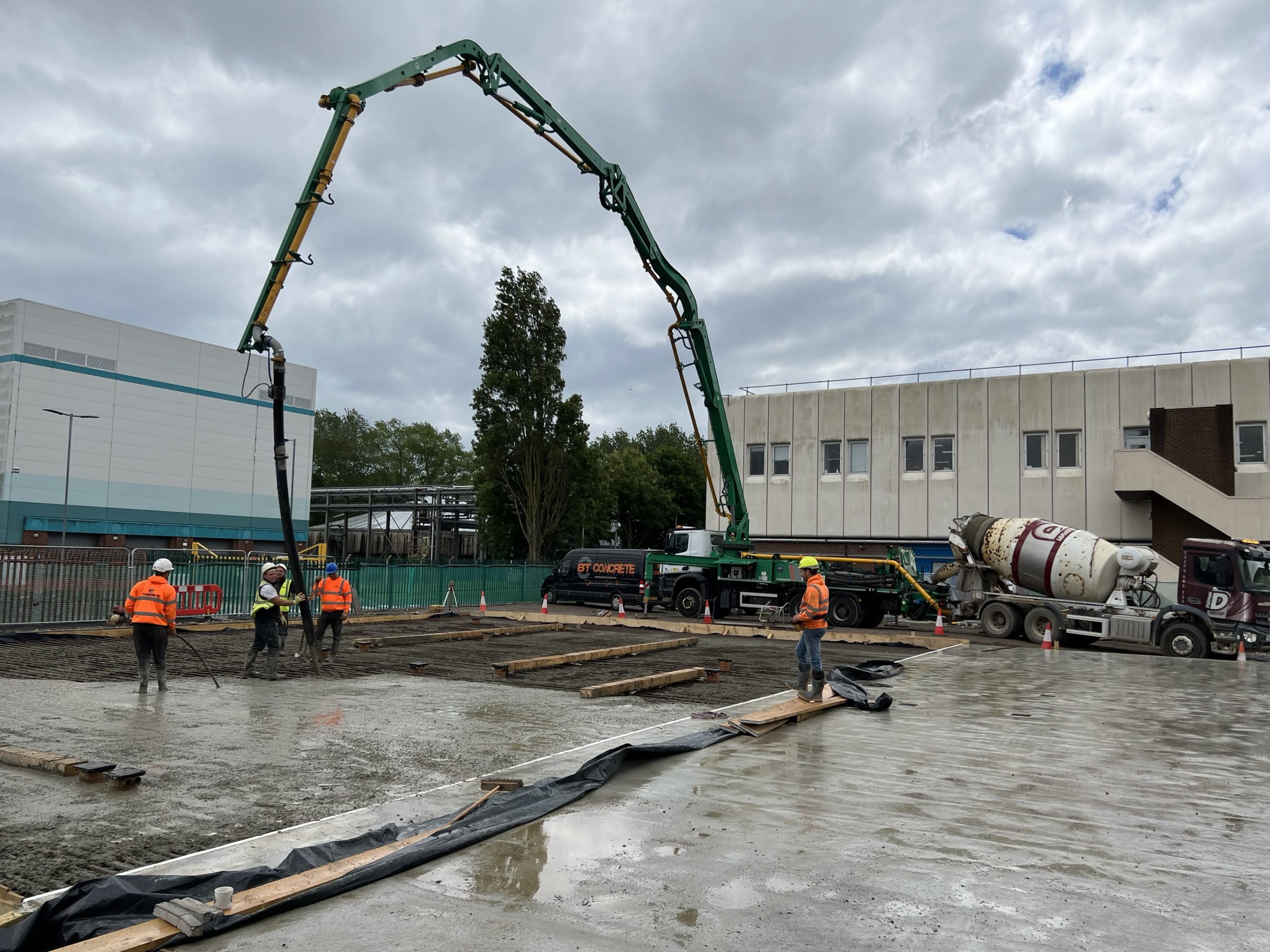
Excavation removes unsuitable material and creates the space needed for the road construction layers. The amount of excavation depends on the design, existing ground conditions and whether the project involves new construction, reconstruction or localised repairs.
For a new road or a major reconstruction project, contractors may need to remove the existing asphalt, concrete or other surface materials.
Damaged sections may be cut out and removed separately when the work is limited to specific areas.
The contractor should establish the required excavation depth and extent from the project specification and site assessment.
The formation is the prepared level on which the road’s foundation layers are constructed. Excavation must achieve the required dimensions and levels while maintaining appropriate safety precautions.
Excavation work needs careful planning because risks can include unstable ground, collapsing sides, falling materials, water ingress and damage to nearby structures or services.
The Health and Safety Executive’s guidance on excavation safety explains the importance of preventing danger to people working in or near excavations.
The appropriate excavation method depends on ground conditions, the depth of the excavation, surrounding structures and the services present.
After excavation, contractors prepare the ground to support the road’s construction layers. This may include checking the formation, addressing soft spots and placing suitable sub base material.
The sub base helps distribute traffic loads and provides a stable platform for the layers above it.
The selected material and required thickness depend on the road design, expected loading, ground conditions and relevant specification. Contractors should not assume that the same construction build up is suitable for every site.
Compaction helps achieve the required stability and density. Contractors use suitable equipment and methods according to the material and project requirements.
Inadequate compaction can contribute to settlement, movement and premature surface defects.
The preparation process may involve placing material in controlled layers and checking that the required conditions have been achieved before proceeding.
The prepared foundation should be checked before the next construction stage begins. If weak areas or unsuitable conditions are identified, they should be addressed rather than simply covered by the next layer.
This is an important quality control point because defects beneath the surface can be difficult and expensive to correct after the road has been completed.
Kerbs and related infrastructure may need to be installed before the final surfacing. These features help define road edges, separate traffic areas and coordinate the surface with drainage and adjoining areas.
Depending on the project, supporting works may include:
Site preparation is not only about physical work. Contractors also need to coordinate people, materials, machinery and the sequence of activities.
A realistic programme should account for the scope of the project, access restrictions, ground conditions, delivery schedules and any required inspections.
Commercial sites may have restrictions on when noisy or disruptive work can take place. Contractors should establish the permitted working hours and any requirements relating to nearby businesses or residents.
Aggregates, drainage components, kerbs and surfacing materials need to arrive at the appropriate stage. Poorly timed deliveries can obstruct access, create storage problems or delay the work.
Road construction may take place alongside drainage, utility installation, building work, landscaping or other external works.
The project team should agree the order of activities to reduce the risk of completed areas being excavated or damaged later.
For practical advice on reducing disruption, read Batten’s article on planning commercial surfacing work around business operations.
Road construction sites can involve moving vehicles, heavy machinery, excavation, construction materials and members of the public. Safety measures need to be planned before work begins and maintained throughout the project.
The specific arrangements depend on the nature and location of the work, but may include:
Before asphalt or another specified surface material is installed, the contractor should confirm that the preceding work is ready for the next stage.
This helps prevent defects caused by unresolved problems beneath the finished surface.
The checks may include:
Once the groundwork is complete and the required checks have been carried out, the site can be prepared for the surfacing operation.
The contractor will confirm the specified material, the planned sequence and the arrangements for transporting and placing it.
Surfacing materials and machinery need to be coordinated so that the work can proceed in the intended sequence. Delays or interruptions may affect productivity and the quality of the finished work.
The contractor should plan where work will start, how the surface will progress and how joints and edges will be treated.
On larger sites, the sequence may be designed to maintain access to parts of the premises while other areas are completed.
The client should understand which areas will be unavailable during construction and when they are expected to become accessible again. The reopening arrangements should reflect the material used, site conditions and the contractor’s instructions.
The finished surface should not be opened to traffic until the contractor confirms that it is suitable for use.
There is no single preparation period that applies to every road project. The time required depends on the size of the site, the amount of excavation, the condition of the existing ground, drainage requirements and the availability of design information.
A small resurfacing project may need relatively limited preparation if the existing foundation is sound and drainage works are unnecessary. A new access road or industrial yard may require more extensive surveys, excavation, sub base construction and infrastructure installation.
Factors that can affect the programme include:
Businesses and property managers can help the project run more smoothly by providing accurate information and making practical arrangements before work starts.
Provide available drawings, previous survey information, records of underground services and details of known drainage problems. Explain where previous repairs have been carried out and whether any areas experience repeated settlement or water collection.
Tell the contractor about delivery schedules, busy periods, loading requirements, parking demand and essential access routes. This allows the work to be planned around the site’s most important activities.
Confirm who will act as the main point of contact and how site updates will be shared. Staff, suppliers, visitors and tenants should receive clear information about temporary restrictions.
Before work begins, review the quotation and establish what is included. Confirm the planned preparation, surfacing, drainage, kerbing, waste removal and finishing work where applicable.
Discuss how unforeseen conditions will be handled and how additional work will be approved.
These steps help reduce misunderstandings and make it easier to manage changes during construction.
Even a well planned road project can encounter difficulties if essential preparation is overlooked. Several mistakes are particularly important to avoid.
A new surface cannot reliably compensate for an unsuitable foundation. Contractors should assess the underlying construction and recommend repairs or reconstruction where necessary.
If existing water problems are not addressed, they may continue after the road is resurfaced. Drainage and surface levels should be considered as part of the overall design.
Underground services must be considered before digging begins. Reviewing available records, locating services and using safe excavation practices can reduce the risk of dangerous incidents and costly damage.
Construction vehicles need suitable routes, and commercial sites may need to remain partly operational. Access arrangements should be agreed before machinery and materials arrive.
A vague quotation can lead to confusion about excavation depths, foundation preparation, drainage improvements and additional costs. A clear written scope helps everyone understand what has been agreed.
Covering an inadequately prepared foundation can make defects more difficult to identify and repair. Required checks should be completed before the next construction layer is installed.
Before road construction begins, use the following checklist to confirm that the main preparation tasks have been considered.
Site assessment
The first step is generally to assess the site and understand the project requirements. This may include a site survey, inspection of the existing surface, review of ground conditions, drainage assessment and identification of underground services.
Ground preparation creates a stable foundation for the road. Excavation, suitable sub base material and proper compaction help the construction layers support the traffic they are designed for.
Yes. Contractors should review available service information and use appropriate locating and safe excavation procedures before and during work near underground services. The exact approach depends on the site and the services involved.
They assess existing drainage, check levels and gradients, identify areas where water collects and determine whether repairs or improvements are required. The drainage solution should suit the site’s layout and design requirements.
The level of investigation depends on the project, but contractors need sufficient reliable information to plan the work safely and appropriately. Larger or more complex projects may require formal surveys and ground investigations.
Potential causes include inadequate ground preparation, weak foundations, poor compaction, unsuitable materials, drainage problems and traffic loading beyond the construction’s design assumptions. The underlying cause should be assessed before repairs are selected.
Businesses can share operating schedules, arrange alternative access, inform staff and suppliers, coordinate deliveries and discuss phased working with the contractor. The best approach depends on the site’s layout and operational needs.
A quotation should clearly describe the agreed work, including relevant preparation, excavation, materials, surfacing, drainage or kerbing, waste handling, programme, payment terms and the process for approving additional work. The precise inclusions depend on the project.
Successful road construction begins well before the first layer of asphalt is installed. Site surveys, ground assessment, underground service checks, drainage planning, excavation, sub base preparation and quality inspections all contribute to the performance of the finished road.
For businesses, developers and property managers, the key is to ensure that the preparation reflects the site’s actual conditions and intended use. A clear scope of work, realistic programme and early communication can help reduce avoidable delays and unexpected costs.
Batten Civil Engineering Ltd provides road and car park construction, groundwork, drainage, kerbing and related civil engineering services across Sussex, Surrey, Kent and London.
If you are planning a new access road, commercial car park or improvement to an existing surface, contact Batten Civil Engineering Ltd to discuss your requirements and request a free, no obligation quote.
You can also view the company’s Google Business Profile for business information and customer reviews.

Commercial surfacing maintenance is an important responsibility for property managers who oversee car parks, access roads, industrial yards, business parks and other shared outdoor spaces. Cracks, potholes, blocked drains and faded road markings can develop gradually, making it easy to overlook problems until they affect safety, business operations or maintenance budgets.
A structured commercial surfacing maintenance checklist helps property managers identify defects early, prioritise repairs and keep external areas in suitable condition. It also provides a practical record of inspections, decisions and maintenance work completed.
Whether you manage an office building in Sussex, a retail site in Surrey, an industrial estate in Kent or a commercial property in London, the right maintenance approach should reflect how the surface is used, the condition of the underlying construction and the risks associated with the site.
This guide explains what property managers should inspect, how often checks should take place, which defects require attention and when professional surfacing support may be appropriate.
A commercial surfacing maintenance checklist is a practical record of the inspections and maintenance tasks required to keep external paved areas in good condition. It helps property managers assess surface deterioration, identify hazards, monitor drainage, maintain road markings and plan repairs.
A typical checklist covers:
Commercial surfaces experience repeated vehicle movements, braking, turning, weather exposure and changes in temperature. Over time, these factors can affect both the visible surface and the layers beneath it.
Without regular inspections, relatively small defects can become more extensive problems. A minor crack may allow water to enter the pavement structure, while a blocked drain can contribute to standing water and deterioration around the affected area.
A planned maintenance programme helps property managers identify these issues before they become more difficult to address.
Uneven surfaces, potholes, loose aggregate and damaged edges can create hazards for pedestrians, drivers and people moving equipment around the site.
Regular checks allow property managers to identify and manage these hazards. Where an immediate risk exists, the affected area should be made safe using suitable temporary controls while appropriate repairs are arranged.
Reactive maintenance often means arranging repairs when a defect has already started affecting site operations. Planned inspections provide more time to obtain quotations, allocate budgets and schedule work.
Early intervention is not always the cheapest solution in every circumstance, but identifying deterioration early gives property managers a better opportunity to compare appropriate repair options.
A well maintained surface is less likely to require unexpected emergency work. Planned repairs can often be coordinated around customer visits, deliveries, staff parking and normal business hours.
Car parks, access roads and external yards are part of a commercial property’s first impression. Clear markings, tidy edges, intact surfacing and functioning drainage contribute to a professional environment.
Documented inspections and maintenance decisions help demonstrate that reported defects have been assessed and appropriate action has been considered. They can also support communication with landlords, tenants, insurers, facilities teams and maintenance contractors.
Property managers can use the following checklist during routine inspections. Record the date, the areas inspected, any defects identified, the urgency of the issue and the action required.
Cracking is one of the most common signs of deterioration in asphalt and tarmac surfaces. However, different cracks can have different causes, so it is important to record their location, extent and pattern rather than treating every crack in the same way.
Look for:
Potholes can develop when the surfacing and underlying materials deteriorate under traffic and environmental exposure. Water entering through cracks or damaged areas can contribute to further deterioration.
During an inspection, look for:
Drainage is a critical part of commercial surfacing maintenance. Water that collects on the surface or enters damaged pavement can contribute to deterioration, particularly where the problem remains unresolved.
Check:
The edges of car parks and access roads can deteriorate where vehicle movements, water erosion or inadequate support affect the surrounding construction.
Pay particular attention to:
Some areas deteriorate faster because they experience more traffic or heavier loads than the rest of the property.
These locations often include:
Previous repairs should remain part of every commercial surfacing inspection. A patch that initially looked satisfactory may later crack, settle or separate from the surrounding surface.
Check:
Commercial surfacing maintenance is not limited to the asphalt itself. Road markings help organise traffic, identify parking spaces and communicate how different parts of the site should be used.
Check:
Standing water is a useful warning sign during a surface inspection. It may indicate blocked drainage, incorrect gradients, settlement or depressions that have developed over time.
Look for:
Surface fretting occurs when aggregate or other surface material becomes loose and the surface begins to break down. It can affect appearance and may indicate that the material is deteriorating.
Check for:
Manhole covers, inspection chambers and drainage structures create transitions between the surrounding pavement and the installed structure. Movement or deterioration around these points can create uneven surfaces.
Check for:
Vegetation growing through cracks can retain moisture and make surface defects harder to monitor. Leaves, mud and other debris may also obstruct drainage or create slippery conditions.
Inspect:
Property managers should consider how people move around the site as well as how vehicles use it.
Check the condition of footpaths, crossing points, ramps, access routes and connections between parking areas and building entrances.
Look for uneven surfaces, damaged edges, standing water, obstructed routes and markings that have become difficult to see.
Where the site includes accessible parking or pedestrian routes, check that the relevant facilities remain usable and that maintenance work does not introduce new barriers.
Property manager action: Prioritise defects that could affect safe access. If temporary closures are needed during repairs, communicate alternative routes and maintain suitable access arrangements where practicable.
The appropriate inspection frequency depends on the property’s use, condition, traffic levels and exposure to weather. A busy retail car park or industrial yard may require more frequent checks than a small office parking area.
The following schedule is a practical starting point, not a universal legal requirement.
Inspect the site regularly for obvious hazards, new potholes, debris, damaged covers and other defects. The frequency should reflect site activity and any previous problems.
For many commercial sites, a documented monthly inspection can provide a useful routine for checking the full surface, drainage points, edges and road markings. Higher risk sites may need more frequent inspections.
Review the surface before and after periods of challenging weather where appropriate. Autumn leaves can obstruct drainage, while heavy rain, frost and temperature changes may reveal or worsen existing defects.
Arrange a more comprehensive review of the surface condition and outstanding maintenance requirements. This is an opportunity to assess deterioration trends, plan budgets and decide whether professional advice is needed.
Additional checks may be appropriate after severe weather, flooding, vehicle impacts, construction activity or reports of a new defect.
Property managers can also consult Batten’s guide on how often commercial car parks should be maintained for further planning considerations.
Seasonal planning helps property managers anticipate problems that may develop at different times of the year.
After winter, inspect the site for:
During warmer periods, property managers may have opportunities to plan larger maintenance projects, subject to suitable conditions and contractor availability.
Review the overall surface condition, arrange repairs and consider whether resurfacing should be included in the next maintenance budget.
High temperatures do not automatically mean every surfacing treatment is suitable, so follow the contractor’s recommendations for the materials and work involved.
Before periods of heavy rainfall, check gullies, channels and other drainage features. Remove accumulated leaves and debris where it is safe to do so.
Inspect areas where water has collected previously and make sure outstanding defects have been recorded.
Continue monitoring potholes, cracks, standing water and damaged access routes. Where freezing conditions are expected, consider how defects and drainage issues may affect site users.
If winter maintenance involves de-icing products, check that the selected materials and application methods are appropriate for the surface and surrounding environment.
Not every defect requires the same response. A prioritisation system helps property managers direct attention towards the most urgent issues while planning less urgent work sensibly.
Examples include a severe pothole in an active vehicle route, a loose utility cover, a significant trip hazard or damage that prevents safe access.
Restrict access or introduce suitable temporary controls where necessary, notify the responsible parties and arrange urgent assessment and repair.
Examples include growing cracks, recurring potholes, damaged edges and persistent standing water.
Record the defect, investigate its cause and arrange repair within a timeframe appropriate to the risk and site conditions.
Examples include faded markings, minor surface wear and non urgent maintenance tasks that do not currently create an immediate hazard.
Include these tasks in the maintenance programme and budget, while continuing to monitor their condition.
This system should be adjusted to the property. A small defect in a heavily used access route may require faster attention than a similar defect in an isolated area.
Inspection records help property managers track deterioration, demonstrate how concerns have been handled and prepare budgets for future work.
A simple spreadsheet or property maintenance system can be sufficient if it is updated consistently.
For every inspection, record:
A maintenance budget should distinguish routine tasks from repairs and larger renewal projects.
Routine maintenance may include inspections, cleaning, vegetation control and drainage checks. Repair budgets may cover localised patching, damaged kerbs or isolated drainage problems. Larger projects may involve partial or full resurfacing.
Use inspection records to identify the work required and group tasks by urgency, location and type.
Where several defects occur in the same area, ask whether they should be addressed as part of a single coordinated project.
When requesting quotations, provide contractors with the same information about the site and the work required. Ask them to explain preparation, materials, drainage, traffic management, waste removal and finishing requirements.
This makes it easier to compare proposals and understand what each price includes.
Even a well maintained site can develop new defects. Set aside an appropriate contingency based on the property’s condition, history and operational risks.
Avoid relying on a generic percentage without considering the actual site. Properties with ageing surfaces or repeated drainage problems may need a different approach from those in good condition.
If inspections show widespread cracking, repeated patch failures or substantial deterioration, obtain professional advice about the options available.
Early planning provides more time to compare solutions, agree budgets and schedule works around the business.
The right maintenance treatment depends on the extent of the damage, its underlying cause and the condition of the existing pavement.
Patching may be suitable where damage is limited to particular areas and the surrounding construction remains in reasonable condition.
Examples include isolated potholes or localised deterioration where the underlying problem can be addressed through a suitable repair.
Resurfacing may be appropriate when a larger area shows widespread surface deterioration, repeated defects or a need for renewal.
However, resurfacing alone may not resolve problems caused by a weak foundation, inadequate drainage or significant settlement. These issues may require additional investigation and construction work.
Seek professional advice if:
Maintenance work can affect parking, deliveries, customers and staff. Planning the project around normal site activity can help reduce disruption.
Before work starts, agree:
Before appointing a contractor, ask questions that help you understand the proposed solution and the responsibilities involved.
Useful questions include:
It should cover cracks, potholes, drainage, standing water, kerbs, surface edges, previous repairs, road markings, pedestrian routes and high traffic areas. It should also include inspection dates, photographs, repair priorities and records of completed work.
Inspection frequency should reflect site usage, condition and risk. Routine visual checks, documented inspections, seasonal reviews and an annual condition assessment can provide a useful starting point, with more frequent checks where heavy traffic or previous defects justify them.
Responsibility depends on the property ownership, lease, management agreement and other relevant arrangements. Property managers should confirm who is responsible for inspections, repairs, drainage and common areas, and make sure reported defects are passed to the appropriate person.
Common signs include cracks, potholes, loose aggregate, rutting, settlement, damaged edges, standing water and failing patches. Faded road markings and damage around drainage structures should also be included in routine inspections.
Yes, localised patching may be suitable when the damage is limited and the surrounding pavement remains in suitable condition. If potholes repeatedly return or the underlying construction is weak, a more extensive repair may be needed.
Poor drainage can allow water to collect on the surface or enter damaged pavement. This can contribute to deterioration and recurring defects, so property managers should investigate persistent standing water and damaged drainage features.
Resurfacing should be considered when deterioration is widespread, repairs are becoming frequent or the existing surface no longer meets the site’s requirements. A professional assessment can help determine whether patching, partial resurfacing or more extensive reconstruction is appropriate.
Yes. Property managers should check parking bays, directional arrows, pedestrian routes and other relevant markings. Repainting or redesigning markings can often be coordinated with resurfacing to create a clear and consistent layout.
Records should include inspection dates, the person carrying out the check, defect locations, photographs, decisions, repairs requested, contractor details and completion dates. Follow up inspections and outstanding actions should also be recorded.
Sometimes. Depending on the site layout and the work required, repairs can be phased to maintain access to selected areas. The contractor and property manager should agree traffic management, pedestrian routes, delivery arrangements and safe reopening procedures.
A commercial surfacing maintenance checklist gives property managers a practical way to identify defects, prioritise repairs and plan future expenditure. By checking cracks, potholes, drainage, kerbs, road markings and high traffic areas, you can build a clearer picture of the property’s condition and take action when problems arise.
The most effective maintenance approach combines routine inspections, accurate records, timely repairs and professional advice when defects suggest a deeper problem. Rather than waiting until the surface becomes difficult to use, property managers can use inspection findings to plan maintenance around operational needs and available budgets.
Batten Civil Engineering Ltd provides surfacing, patching and related civil engineering services across Sussex, Surrey, Kent and London. If you manage a commercial car park, access road or industrial yard and need advice on repairs or resurfacing, discuss your site requirements with the team.
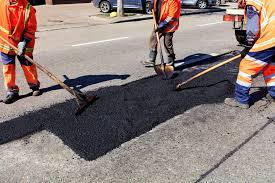
Choosing the right surfacing contractor can make a significant difference to the safety, durability and long term cost of a commercial property. Whether you need a new car park, a resurfaced access road, repairs to an industrial yard or improved parking facilities, the quality of the contractor’s work will influence how well the finished surface performs.
For businesses, hiring a surfacing contractor involves more than comparing prices. You need to understand the contractor’s commercial experience, the proposed materials, ground preparation, drainage arrangements, safety procedures, project schedule and the terms of the quotation.
A surface that looks attractive on completion may develop problems if the underlying ground has not been prepared correctly or the materials are unsuitable for the traffic it receives. Taking time to assess contractors before appointing one can help you avoid unnecessary disruption, repeat repairs and unexpected costs.
This guide explains what businesses should check before hiring a surfacing contractor in the UK, which questions to ask, how to compare quotations and how to identify a contractor suited to your project.
Commercial surfaces experience different demands from residential driveways. Office car parks may accommodate employees and visitors throughout the day, while industrial yards and delivery areas can experience frequent movements from heavier vehicles.
The right surfacing solution depends on the site’s purpose, existing condition, ground characteristics, drainage and expected traffic. A contractor needs to understand these factors before recommending materials and construction methods.
Choosing an unsuitable contractor can result in:
One of the first things to check before hiring a surfacing contractor is whether they have experience with projects similar to yours.
Not every contractor specialising in domestic driveways will have the equipment, workforce or project management experience required for a busy commercial car park or industrial access road.
Commercial projects can involve larger working areas, heavier vehicles, drainage requirements, multiple access points and strict deadlines. The contractor should understand how these factors influence construction methods and the finished surface.
Consider whether the contractor has worked on:
Before making a decision, ask:
Surfacing work involves machinery, construction vehicles, hot materials, excavation and the movement of workers around a site. Depending on the location, customers, employees, delivery drivers and members of the public may also be affected.
Before appointing a contractor, ask for evidence of appropriate insurance and a clear explanation of how risks will be managed.
Depending on the work and contractual arrangements, relevant cover may include:
Ask how the contractor will protect workers and other people during the project. Relevant arrangements may include site access controls, vehicle movements, pedestrian routes, equipment operation, dust management and emergency procedures.
For commercial construction projects in Great Britain, the Construction (Design and Management) Regulations 2015 may apply. Commercial clients have duties relating to suitable project management arrangements and the appointment of capable contractors.
The Health and Safety Executive’s guidance for commercial clients explains these responsibilities.
The exact documentation required will depend on the project. Ask the contractor which safety plans, risk assessments and other documents are appropriate before work begins.
A professional contractor should be able to explain the practical measures it intends to use rather than offering vague assurances that the site will be safe.
A detailed written quotation is essential when comparing surfacing contractors. Two quotations may appear similar in price while covering very different levels of work.
One contractor may include excavation, foundation repairs, drainage improvements and line marking. Another may quote only for placing a new surface over the existing construction.
Without understanding these differences, you cannot make a reliable comparison.
A clear quotation should explain the following where relevant:
Imagine two contractors quote for a commercial car park.
Contractor A provides a lower price but excludes drainage repairs, extensive preparation and new road markings. Contractor B includes a site assessment, specified preparation, surfacing, finishing and clearly defined exclusions.
The lower quotation may initially appear more attractive. However, once additional work is included, the total cost could change considerably.
The important question is not simply which contractor charges less. It is which proposal offers the appropriate scope, quality and value for the project.
Always ask for clarification where an estimate contains vague descriptions such as “standard preparation” or “surfacing as required”.
The contractor should recommend a surface that suits the intended use of the site.
Tarmac and asphalt are common choices for roads, car parks and access routes, but the appropriate specification depends on factors such as traffic levels, vehicle loading, ground conditions and the condition of the existing construction.
Other materials may be suitable for particular applications, depending on the design and requirements.
Before accepting a proposal, establish:
A durable surface starts with suitable ground preparation. Even high quality surfacing materials may fail prematurely if the underlying construction is unstable or inadequately prepared.
This is particularly important for commercial sites that experience repeated vehicle movements or concentrated loading.
The exact requirements depend on the site, but preparation may include:
Be cautious if a contractor recommends a major resurfacing project without inspecting the site or discussing the existing foundation.
Other warning signs include a quotation that says very little about preparation, no explanation of how damaged areas will be treated, or an unwillingness to discuss the causes of existing surface failures.
Batten Civil Engineering Ltd also offers groundwork and civil engineering services, including work involving drainage, kerbing, site clearance and road or car park construction.
Where these elements are relevant, coordinating them with surfacing can help businesses plan the project as a complete solution.
Drainage should be discussed before surfacing work begins, not after the new surface has been installed.
Poor water management can contribute to standing water, deterioration, erosion and damage to the underlying construction. It can also create inconvenience for employees, visitors and delivery drivers.
A suitable site assessment should consider:
Suppose a business has a car park with recurring puddles near the main entrance. Simply placing a fresh layer of tarmac over the existing surface may not solve the problem if the underlying levels are incorrect.
A contractor should investigate why the water collects and determine whether adjustments to levels, drainage or the existing construction are required.
Ask the contractor to explain how the proposed work will address the underlying cause.
This helps you understand whether the quotation is designed to resolve the problem or merely improve the surface temporarily.
References help you assess how a contractor performs beyond the initial sales conversation.
Look for evidence of projects similar to your own, especially where the work involved commercial operations, challenging access conditions or a substantial area of surfacing.
A useful case study should explain:
Commercial surfacing work can affect parking, deliveries, customer access and normal business operations. The contractor should understand these requirements before agreeing on a programme.
An unrealistic schedule can create problems even if the physical surfacing work is completed to a good standard.
Ask:
For example, a retail park may need to keep customer parking available during busy periods. A warehouse may need to preserve access for delivery vehicles, while an office could arrange for certain areas to be completed outside normal working hours.
Discuss these requirements before the contract is agreed.
A contractor should explain whether phased working is practical, how access will be controlled and what cooperation will be needed from your business.
Planning early can reduce avoidable disruption and help employees, visitors and suppliers understand any temporary changes.
The resources available to a contractor can influence how efficiently a project is delivered.
Commercial surfacing may require specialist machinery, transport, skilled operatives and suitable equipment for preparation, laying, compaction and finishing.
Ask how the contractor intends to resource the project and whether the necessary equipment will be available when required.
Appropriate equipment can help with:
Quality should be considered throughout the project rather than judged solely by how the surface looks on completion.
The contractor should be able to explain how it will check preparation, construction and finishing against the agreed specification.
Depending on the project, checks may include:
A commercial car park may require clear parking bays, directional arrows, pedestrian routes and other markings. If these are part of the project, establish who will provide them and when they will be completed.
Batten Civil Engineering Ltd provides line marking services for applications including roads, car parks, playgrounds, factories and warehouses.
Clarifying the finishing requirements before work starts can help avoid disagreements at handover.
Before signing a contract, ask whether any workmanship or materials warranty is offered and exactly what it covers.
Warranty terms vary according to the contractor, materials, project specification and contractual arrangements. Do not assume that every surfacing project automatically includes the same level of protection.
Once you have received proposals from suitable contractors, compare them against the same requirements.
A fair comparison should consider the complete scope of work, the construction specification, the proposed programme, safety arrangements, quality checks and payment terms.
For each quotation, record whether the contractor has provided:
Consider a business comparing three quotations for a car park resurfacing project.
The first contractor offers the lowest price but has not explained the foundation preparation. The second provides a detailed specification, identifies drainage concerns and sets out the work programme. The third has relevant experience but excludes line marking and waste removal.
Rather than choosing immediately, the business asks each contractor to clarify the scope and revise the quotations where necessary.
This makes it easier to compare like for like proposals and understand the total expected cost.
Before authorising work, make sure the commercial agreement reflects what has been discussed.
The written contract or accepted quotation should identify the parties, the scope of work, the price, payment arrangements, programme and the process for managing changes.
Check:
Surfacing is often connected to other elements of a commercial property.
A new car park may require kerbing, drainage, access improvements and line marking. An industrial yard may need changes to levels or repairs to existing construction before the final surface is laid.
If these activities are planned separately without proper coordination, the project can become more complicated.
Ask whether the contractor can undertake the relevant supporting work or coordinate with other specialists.
A joined up approach can make responsibilities clearer and help reduce the risk of one part of the project interfering with another.
This does not mean every project needs one contractor for every task. It means you should understand who is responsible for each element and how the different activities will fit together.
For example, if drainage works are required before resurfacing, establish who will complete them, who will check the finished levels and how the handover between trades will be managed.
Batten Civil Engineering Ltd offers surfacing, groundwork and civil engineering services that can support projects involving these related requirements.
Choosing a contractor that regularly works in your area can be useful when arranging site visits, planning logistics and discussing ongoing requirements.
However, local coverage should be considered alongside experience, capability, safety and value.
Confirm that the contractor can attend your site, provide the necessary resources and meet the proposed programme.
You should also establish who will be your main point of contact.
A reliable working relationship should include:
Although every project is different, several warning signs deserve further investigation before you make a commitment.
A contractor may be able to provide an initial estimate from photographs or measurements, but a reliable final proposal should account for relevant site conditions and the work required.
Ask how the contractor will verify the scope before work begins.
A low price is not automatically a problem. However, if it is significantly below other proposals, check whether preparation, drainage, waste removal, finishing or traffic management has been excluded.
Ask for the actual specification, installation approach and quality checks rather than relying on broad claims.
Make sure you understand the payment terms and have the scope of work in writing before committing.
If the contractor cannot explain how it will manage people, vehicles and equipment safely, ask for clarification before proceeding.
Confirm how problems will be reported, investigated and addressed after completion.
Taking time to investigate these issues is generally preferable to discovering them once the work is underway.
When comparing surfacing contractors, businesses should look for relevant experience, clear communication, suitable resources and a practical understanding of the complete project.
Batten Civil Engineering Ltd has provided surfacing and civil engineering services since 1993. The company serves commercial and residential customers across Sussex, Surrey, Kent and London.
Its published services include:
Businesses should check commercial experience, insurance, health and safety arrangements, quotations, materials, ground preparation, drainage, references, project schedules and aftercare terms. They should also confirm the full scope of work and obtain the agreed specification in writing.
Look for relevant project experience, clear written quotations, appropriate insurance, credible references and a willingness to explain the proposed work. A reliable contractor should be transparent about costs, exclusions, potential risks and how unexpected problems will be managed.
No. The lowest quotation may exclude important preparation, drainage, waste removal or finishing work. Compare quotations against the same scope and specification so that you can evaluate overall value rather than price alone.
Ground preparation helps create a stable foundation for the finished surface. If unsuitable materials, weak areas or compaction problems are not addressed, the surface may develop cracks, settlement or other defects under traffic.
Businesses should verify that their contractor has appropriate insurance for the proposed work and contractual arrangements. Relevant cover may include public liability and employers’ liability where legally required. Ask for current evidence and check any project specific requirements.
The duration depends on the size of the car park, the condition of the existing surface, preparation requirements, drainage work, weather and the construction specification. Ask for a project programme that identifies the work stages, expected closures and reopening arrangements.
Sometimes. Depending on the site, work may be completed in phases to maintain access to selected areas. The contractor should assess vehicle movements, pedestrian routes, deliveries and safety requirements before confirming whether phased working is practical.
A quotation should explain the work areas, preparation, proposed materials, construction requirements, drainage and kerbing where relevant, waste removal, traffic management, programme, exclusions and payment terms. It should also clarify the agreed finishing requirements and any warranty offered.
Drainage problems can contribute to standing water and premature surface deterioration. Checking levels and drainage before work starts helps identify whether the proposed resurfacing will address the existing problems or whether additional work is required.
Businesses can research contractors with relevant commercial experience, review completed projects and request written quotations. Batten Civil Engineering Ltd provides surfacing and civil engineering services across Sussex, Surrey, Kent and London. Businesses can contact the company to discuss their site and project requirements.
Before signing a contract, make sure you can answer yes to the following:
Hiring a surfacing contractor is an important decision for any business responsible for roads, car parks, access routes or industrial yards. The right choice begins with a clear understanding of the site, a detailed specification and a fair comparison of contractors.
By checking experience, ground preparation, drainage, safety, references, project planning and contractual terms, businesses can make more informed decisions and reduce the risk of avoidable problems.
Batten Civil Engineering Ltd provides surfacing, patching, groundwork, civil engineering and line marking services across Sussex, Surrey, Kent and London.
If you are planning a new commercial car park, need to resurface an access road or want to discuss repairs to an existing surface, contact Batten Civil Engineering Ltd to explain your requirements and request a quotation.